The following is an assignment I wrote for University. Me and my fellow classmates found that, while extremely difficult to unpack, the endeavor was well worth it. Understanding Martin Luther (the Reformer, not King) in the context of late medieval theology was something I doubt I would have done without being given this assignment. While I doubt that I will receive a good grade, I am very happy to have learnt what I have over the past few weeks.
This is an academic essay. We were given permission to assume a certain knowledge at an academic level. Lots of thinkers, movements, and event are left largely unexplained. At some point I want to do a video/episode explaining things more clearly, but for now I just wanted to put this out there as it is, for whoever wants to give it a look. Enjoy!
Offer a critical assessment of Martin Luther’s theology of justification in the context of developments in late medieval theology.
The task of this essay is not simple. At the outset, therefore, some preliminary explanations must be made. First, Luther’s doctrine of justification developed throughout his life as he navigated medieval streams of theology. Therefore, Luther’s theology of justification, and his late medieval context, must be taken together by tracing Luther’s thought as it developed. Second, justification is set within the larger theme of being right with God. Therefore, only the medieval theology that directly deals with this will need to be engaged with. In this way, a critical assessment of Luther’s theology, as it developed through his encounters with medieval thought, will be given.
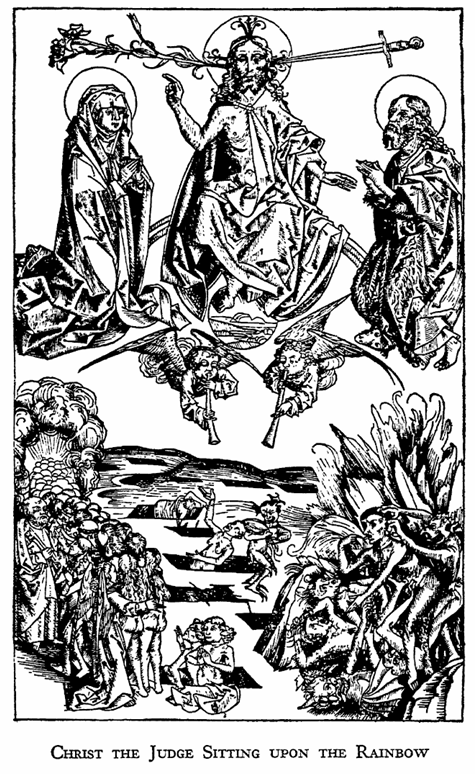
Luther’s early theology as pertains to justification may be summarized with a single word: terror.[1] Preaching in the early 1530s, Luther would reflect on the effect that scholastic theology had on him in earlier years: “Christ was depicted as a grim tyrant, a furious and stern judge who demanded much of us and imposed good works as payment for our sins…. Fear and terror prod and goad me away from him, so that I do not stay with him.”[2] The pope drove people to Christ out of a fear of Him, Luther claimed, “with good works, by which they were to atone for their sins.” [3] And if that were not sufficient to placate Jesus and thus the Father, then Mary could be invoked; and if Mary was not satisfied, then other saints could be invoked to placate her.[4] It is no wonder that his reaction reflected his theology when, in 1505, being thrown from his horse by a lightning strike, he cried out “saint Anne help me! I will become a monk.”[5] Saint Anne was Martin’s father’s saint, and the most obvious to supplicate.[6]
Very little at all is known about Luther’s upbringing, and only scant speculations are entertained by scholars.[7] What is certain is that his father, Hans Luther, suffered from the same theologically induced terror as Martin.[8] When two of Martin’s brothers died, Hans took it as a punishment from God. For he had voices his disapproval of Martin’s decision to become a monk, rather than support his parents in their old age (showing how fast a grip the spirit of the pharisees had on Luther’s family in that late medieval environment, see Mark 7:9-13).[9]
Even the prayer books of Luther’s day reinforced this justification by works, emphasizing a contractual nature to a person’s relation to God, and used terror to motivate “Christian” living.[10] Handbooks of the day depicted demons trying to get a dying man to commit mortal sin, and thus be damned to hell, with the soul crushing exhortation “never despair.”[11] Stained glass windows depicted the pious (monks and scholars) as justified, the laymen as damned, and Jesus as the harsh judge between the two.[12] This was the world in which young Luther was reared, and the sort of justification before God he was taught to pursue. It is unsurprising, then, that he followed through on his vow to become a monk, and why he thought monkery was the surest way to attain certainty of a right standing before God.
Luther chose a strict monastery, joining an Augustinian cloister in Erfurt in July of 1505. There he would encounter Aristotelian theology head-on, and grow Ockhamist roots.
The whole structure of the scholastic doctrine of justification by works (the ruling theology of Rome) was built on Aristotle’s philosophy, as adapted by Aquinas.[13] Core tenets of this structure in late medieval times, as pertains to being right with God, are as follows: The will is free to choose to do good or evil, and thus capable of gaining merit through acts.[14] Grace is a quality infused into the soul through right choices which enables more good works.[15] One forms habits through doing good works, becoming more justified (just) over time.[16] In other words, late medieval scholasticism held to a justification through cooperation, through a view of the primacy of the will.[17]
To this structure Luther became increasingly opposed. Even as early as 1508, Luther was growing an “aversion” to Aristotle.[18] Certainly humanism had a hand in this. And there is a good case to be made that the influence of Ockham had much to do with this aversion, but not insofar as pertaining to justification.[19] For that, Luther looked to Augustine, whom he quoted from extensively in his lectures on Psalms and Romans from the years 1513-1516.[20]
In 1515-1516, when giving his Lectures on Romans, Luther was breaking free from Aristotle in significant ways. He began pitting Aristotle against Augustine on the issue of being made right before God.[21] He realized that, contrary to Aristotle’s teaching, one acts righteously because one has been made righteous.[22] During these years, Luther was refining his understanding of sin and anthropology, laying the foundations for his mature doctrine of justification without having it. At this point, Luther “knew no other view than… that… man was able and obliged to earn ‘grace’ by his own power.”[23] Whereas Martin would later say that justification involves “simple belief in God’s declaration of forgiveness, here it looked more like an exercise in humility: we are justified by condemning ourselves.”[24] This was a salvation by confession.[25] He still believed in a cooperative model of justification.[26] He still believed that justification was a process of becoming more righteous.[27] His doctrine of sin was becoming more radical: that sin was self-love (not merely bad action).[28] Yet he thought that that self-love could only be overcome “through a superabundant infusion of grace” and a resignation to the will of God.[29]
In April of 1516, something of the light of true justification was certainly breaking in on Luther’s heart. In a letter to George Spenlein, he gives an early prototype of his mature doctrine of justification as he would later present it in the Freedom of the Christian.[30] In May of 1517, Luther went so far as to write that “Our theology and St. Augustine are progressing well, and with God’s help rule at our University. Aristotle is gradually falling from his throne, and his final doom is only a matter of time.”[31] In September of 1517, in Disputations Against Scholastic Theology, Luther made a public denunciation of the necessity of Aristotle, scholasticism notion of the freedom of the will, and several theologians of the via moderna such as Gabirel Biel.[32] However, it is clear from Luther’s explanation of the Disputation in 1518, he had not yet reached his mature understanding of justification.[33] That would come later in his “tower experience.”
To understand how Luther could reject Aristotle, denounce many of the via moderna, and still remain committed to cooperative model of justification, we need to consider the influence of Ockhamism more minutely, and of Staupitz.[34] While the influence of both is widely debated, it is worth considering each.[35] For both had positive and negative influences on Luther.
Luther could not escape a theology of the free capitulation of the will to God because his perception of God was as “arbitrary Will.”[36] As early as 1507, Luther became well acquainted with Gabriel Biel, who brought Ockhamism into Luther’s thought.[37] Biel championed the idea that God has made a pactum with humanity, a “binding contract,” in which God gives “grace to those who do their best,” despite the fact that human moral acts are devoid of sufficient inherent value, simply because He has bound Himself to do so.[38] Biel’s God is detached, contractual, caring only insofar as He has agreed to, remitting sins based on a decision of His will.[39] The onus is on man to remove the obstacle of some sin, and thus merit the first grace of God which enables further grace.[40] Luther, in his commentary on Psalm 114:1, accepted this.[41] While some of Ockhamism helped Luther reach his Reformed doctrines and reject Aristotle, it did not free him from his terror.[42]
To this influence was added that of Johannes Von Staupitz, a mystic. While this mysticism gave Luther “conceptual scaffolding” at a critical turn in his theology, it did not make him a mystic.[43] Luther held Staupitz in high regard, as late as 1530 and 1542, and from the beginning of their interactions.[44] In 1510, Luther was taking the side of Stauptiz in controversies.[45] In a letter dated September of 1523, Luther credits Staupitz as the one through whom “the light of the gospel first began to shine out of the darkness into my heart.”[46] In that letter, Luther also voices his concern for his master and friend, and for good reason. For in that same year, Staupitz defended the doctrine that men are “called to be cooperators with God.”[47] In this area, Luther made a decisive break with Stuapitz. Luther would come to reject the idea that the righteousness by which sinners are justified comes from within, seeing instead an alien, imputed, and passive righteousness.[48]
Yet, even after Luther had developed his mature doctrine, he did not reject Staupitz with the majority of the scholastics. For it was Staupitz who opened wide doors for Luther to read Scripture.[49] It is likely that he also introduced Luther to key concepts of justification, including the concept of the “true, nay the truest, marriage… of Christ and the church,” which is central to Luther’s developed understanding of justification.[50] The similarities between the two on their usage marriage imagery is striking, as are the distinctives (see Appendix – Marriage Imagery Comparison).[51] Though both employed the image, and use the same concepts to do so, Luther’s was a marriage of grace and faith, whereas Staupitz’s was a marriage of cooperation and contract. For by that time, Luther had had his “tower experience,” to which we now turn.
Precisely what led up to Luther’s “tower experience,” and the exact dating of it, is beyond the scope of this essay. I hold to 1519, however it should be noted that this is disputed.[52] “So named because he had his study in the monastery tower,” in reality, Luther would likely have been happier for it to be known as his experience of Romans 1:17.[53] For “that place in Paul,” he wrote, “was for me truly the gate to paradise.”
There I began to understand that the righteousness of God is that by which the righteous lives by a gift of God, namely by faith. And this is the meaning: the righteousness of God is revealed by the gospel, namely, the passive righteousness with which merciful God justifies us by faith, as it is written, “He who through faith is righteous shall live.”[54]
By 1520, as revealed in works like his Freedom of the Christian, Luther finally entered rest in Christ.[55] The Father, he saw, was merciful in Christ, and not far away.[56] God justifies the sinner on the basis of Christ’s righteousness – which is utterly alien to the sinner, and does so not on the basis of one’s own works or by the infusion of grace.[57] God justifies immediately, not progressively through making one more just. And faith replaced the will as that which receives justification, for such a justification must be received passively.[58] This was a justification by faith only, wherein sinners have Christ as a gift, and wherein all of Christ’s righteousness becomes theirs in an instant by imputation, and all their sin becomes Christ’s.[59] While Luther’s mature doctrine is often interpreted to be primarily forensic, it was, in fact, equally deeply intimate.[60] Central to his doctrine was union with Christ, the soul’s marriage with Christ, whereby “Christ and the soul become one flesh.”[61] This “blessed exchange” in mystical marriage was not merely legal (although it was). It was relational, actual, and covenantal, rather than contractual. Faith was no longer confession or contrition; faith was to have Christ.
Luther, within his late medieval context, credited his mature understanding of justification to Scripture. “I did not learn my divinity at once,” he said, “but was constrained by my temptations to search deeper and deeper;” for “the pope, the universities, all the deep-learned, and the devil; these hunted me into the Bible, wherein I sedulously read, and thereby, God be praised, at length attained a true understanding of it.”[62]
Luther’s theological developments were originally spurred on by terror – terror of leaving sin unconfessed, terror of God Himself, and terror as a means of justifying himself before God. That terror gave way to the freedom of the Biblical doctrine of justification, which remained essentially the same from 1520 onward.[63] It was in his union with Christ by faith alone that Luther could say “He will not be a terror to me, but a comfort.”[64]
Word Count: 2,091
Appendix – Marriage Imagery Comparison
| LUTHER | STAUPITZ |
| “between them a true marriage—indeed the most perfect of all marriages”[65] | “between Christ and the Christian there is a true, nay the truest, marriage”[66] |
| Christ gives Himself.[67] | Christ gives Himself.[68] |
| The two become one flesh[69] | The two become one flesh.[70] |
| “everything they have they hold in common, the good as well as the evil.”[71] | “how the merits of Christ really become ours”[72] |
| No excluded blessings given to the sinner, or curses taken on Christ[73] | No excluded blessings[74] |
| In Christ, united but not fused, as in a human marriage[75] | “he is Christ as much as he is himself”[76] |
| Faith unites Christ and the Christian[77] | Contractual agreement[78] |
| Faith is a gift: “the wedding ring of faith [Christ] shares”[79] | Union through vows[80] |
| The cross is central.[81] | The contract is central.[82] |
Bibliography
Bainton, Roland H. Here I Stand: A Life of Martin Luther Here I Stand. Nashville, New York: Abingdon-Cokesbury Press, 1950.
Böhmer, Heinrich. Luther in Light of Recent Research. Translated by Carl F. Hoth, Jr. New York: The Christian Herold, 1916.
Frost, R N. “Aristotle’s Ethics: The Real Reason for Luther’s Reformation?” No pages. Cited 11 November 2025. Online: https://intellection.wordpress.com/2006/11/14/aristotles-ethics-the-real-reason-for-luthers-reformation/
—————. Richard Sibbes: God’s Spreading Goodness. Vancouver, Washington: Cor Deo Press, 2012.
Horton, Michael. Justification. Vol. 1. New Studies in Dogmatics. Grand Rapids, Michigan: Zondervan, 2018. Perlego edition.
Kolb, Robert, Irene Dingle, and L’ubomír Batka, eds. The Oxford Handbook of Martin Luther’s Theology. Oxford: Oxford University Press, 2014.
Lindsay, Thomas. A History of the Reformation. Vol. 1. 2nd ed. Edinburgh: T. & T. Clark, 1946.
Lohse, Bernhard. Martin Luther’s Theology: Its Historical and Systematic Development. Edited and translated by Roy A. Harrisville. Minneapolis: Fortress Press, 2011.
Luther, Martin. Galatians. The Crossway Classic Commentaries. Wheaton, Illinois: Crossway Books, 1998). Perlego edition. https://ccel.org/ccel/luther/tabletalk/tabletalk?queryID=43552575&resultID=1239.
—————. Career of the Reformer: I. Vol. 31 of Luther’s Works, American edition. Edited by Harold J Grimm and Helmut T. Lehmann. Philadelphia: Muhlenberg Press, 1957.
—————. Career of the Reformer: IV. Vol. 34 of Luther’s Works, American edition. Edited by Lewis W. Spitz. Philadelphia: Muhlenberg Press, 1960.
—————. Lectures on Romans: Glosses and Scholia. Vol. 25 of Luther’s Works. Edited by Hilton C. Oswald. St. Louis, Missouri: Concordia Publishing House, 1972.
—————. Letters I. Vol. 48 of Luther’s Works, American edition. Edited and translated by Gottfried G. Krodel. Philadelphia: Fortress Press, 1963.
—————. Letters II. Vol. 49 of Luther’s Works, American edition. Edited and translated by Gottfried G. Krodel. Philadelphia: Fortress Press, 1972.
—————. Sermons on the Gospel of St. John: Chapter 6-8. Vol. 23 of Luther’s Works. Edited by Jaroslav Pelikan and Daniel E. Poellot. St. Louis, Missouri: Concordia Publishing House.
—————. Table Talk. Translated by William Hazlitt. Grand Rapids, Michigan: Christian Classics Ethereal Library, n.d.
McGrath, Alistair E. Iustitia Dei: A History of the Christian Doctrine of Justification. 3rd ed. New York: Cambridge University Press.
Oberman, Heiko Augustinus. Forerunners to the Reformation: The Shape of Late Medieval Thought. Translated by Paul L. Nyhus. Holt, Rinehart and Winston, 1966.
—————. Luther: Man between God and the Devil. Translated by Eileen Walliser-Schwarzbart. London: Yale University Press, 1981.
Packull, Werner O. “Luther and Medieval Mysticism in the Context of Recent Historiography.” Renaissance and Reformation 6 (1982): 79-93. https://www.jstor.org/stable/43444352.
Reeves, Michael. Introducing Major Theologians: From the Apostolic Fathers to the Twentieth Century. Norton Street, Nottingham: Inter-Varsity Press, 2015.
—————. Rejoice and Tremble: The Surprising Good News of the Fear of the Lord. Wheaton, Illinois: Crossway, 2021.
Smith, Preserved. “Luther’s Development of the Doctrine of Justification by Faith Only.” The Harvard Theological Review 6 (1913): 407-25. https://www.jstor.org/stable/1507031.
Steinmetz, David Curtis. Misericordia Dei: The Theology of Johannes Von Staupitz in its Late Medieval Setting. Leiden, Netherlands: E. J. Brill, 1968.
Tappert, Theodore G., ed. & trans. Luther: Letters of Spiritual Counsel. Louisville, Kentucky: Westminster John Knox Press.
[1] Michael Reeves, Rejoice and Tremble: The Surprising Good News of the Fear of the Lord (Wheaton, Illinois: Crossway, 2021), 96.
[2] Martin Luther, Sermons on the Gospel of St. John: Chapter 6-8, Vol. 23 of Luther’s Works, Jaroslav Pelikan and Daniel E. Poellot eds. (St. Louis, Missouri: Concordia Publishing House, 1959), 57.
[3] Luther, Sermons on the Gospel of St. John, 57.
[4] Roland H. Bainton, Here I Stand: A Life of Martin Luther Here I Stand (Nashville, New York: Abingdon-Cokesbury Press, 1950), 28.
[5] Bainton, Here I Stand, 33.
[6] Bainton, Here I Stand, 34.
[7] Bainton, Here I Stand, 23.
[8] Bainton, Here I Stand, 26.
[9] Bainton, Here I Stand, 34.
[10] Preserved Smith, “Luther’s Development of the Doctrine of Justification by Faith Only,” The Harvard Theological Review 6 (1913): 407-25. https://www.jstor.org/stable/1507031, 409.
[11] Bainton, Here I Stand, 29.
[12] Thomas Lindsay, A History of the Reformation, vol. 1, 2nd ed (Edinburgh: T. & T. Clark, 1946), 198.
[13] Aristotle took up his authoritative role in medieval theology through Aquinas, but for the sake of brevity and clarity, Aquinas must be largely omitted from this essay.
[14] R N Frost, Richard Sibbes: God’s Spreading Goodness (Vancouver, Washington: Cor Deo Press, 2012), 74.
[15] Frost, Richard Sibbes, 76.
[16] Michael Horton, Justification, vol. 1, New Studies in Dogmatics (Grand Rapids, Michigan: Zondervan, 2018), Perlego edition, “Reforming Justification.”
[17] Robert Kolb, Irene Dingle, and L’ubomír Batka, eds., The Oxford Handbook of Martin Luther’s Theology (Oxford: Oxford University Press, 2014), 268-269; R N Frost, “Aristotle’s Ethics: The Real Reason for Luther’s Reformation?” intellection, 14 November 2006, https://intellection.wordpress.com/2006/11/14/aristotles-ethics-the-real-reason-for-luthers-reformation/
[18] Heinrich Böhmer, Luther in Light of Recent Research, trans. Carl F. Hoth, Jr. (New York: The Christian Herold, 1916), 49.
[19] Bernhard Lohse, Martin Luther’s Theology: Its Historical and Systematic Development, ed. & trans. Roy A. Harrisville (Minneapolis: Fortress Press, 2011), 49.
[20] Lohse, Martin Luther’s Theology, 23.
[21] “But those men speak in the manner of Aristotle in his Ethics, when he bases sin and righteousness on works, both their performance or omission. But blessed Augustine says very clearly that ‘sin, or concupiscence, is forgiven in Baptism, not in the sense that it no longer exists, but in the sense that it is not imputed.’” Martin Luther, Lectures on Romans: Glosses and Scholia, Vol. 25 of Luther’s Works, ed. Hilton C. Oswald (St. Louis, Missouri: Concordia Publishing House, 1972), 261.
[22] “According to [Aristotle], righteousness follows upon actions and originates in them. But according to God, righteousness precedes works, and thus works are the result of righteousness, just as no person can do the works of a bishop or priest unless he is first consecrated and has been set apart for this.” Martin Luther, Lectures on Romans, 152.
[23] Böhmer, Luther in Light of Recent Research, 79.
[24] Michael Reeves, Introducing Major Theologians: From the Apostolic Fathers to the Twentieth Century (Norton Street, Nottingham: Inter-Varsity Press, 2015), 164.
“Thus he who gives up God and His creatures, even himself, and gladly and willingly goes into nothingness and death and of his own free will resigns himself to damnation, not believing that he is worthy of sharing in any other of these things, this man plainly has made satisfaction to God and is righteous.” Martin Luther, Lectures on Romans, 411.
[25] “that the faith which leads to righteousness does not arrive at its goal of righteousness, that is, salvation, if it does not arrive at confession. For confession is the principal work of faith by which a man denies himself and confesses God and thus he both denies and confesses to such an extent that he would deny his own life and all things rather than affirm himself.” Martin Luther, Lectures on Romans, 411.
[26] Luther’s Works, Lectures on Romans, p. 375.
[27] Luther works, Lectures on Romans, 245. “For God has not yet justified us, that is, He has not made us perfectly righteous or declared our righteousness perfect, but He has made a beginning in order that He might make us perfect.”
[28] “This is the better interpretation, because man with his natural sinfulness does love himself above all others, seeks his own in all matters, loves everything else for his own sake, even when he loves his neighbor or his friend, for he seeks his own in him.” Luther’s Work’s, Lectures on Romans, 475.
[29] Luther’s Works, Lectures on Romans, 381.
[30] Theodore G. Tappert, ed. & trans., Luther: Letters of Spiritual Counsel, (Louisville, Kentucky: Westminster John Knox Press), 109-111.
[31] The group opposed to Aristotle of which Luther saw himself a part (“us”) is unknown, but some have speculated that he was referring to those of the Ockhamist movement. Martin Luther, Letters I, vol. 48 of Luther’s Works, American edition, ed. and trans. Gottfried G. Krodel (Philadelphia: Fortress Press, 1963), 42.
[32] Kolb, The Oxford Handbook of Martin Luther’s Theology, 35-36.
[33] Martin Luther, Career of the Reformer: I, Vol. 31 of Luther’s Works, American edition, ed. Harold J Grimm and Helmut T. Lehmann (Philadelphia: Muhlenberg Press, 1957), 100-101.
[34] I have chosen to focus on Staupitz and not mysticism more broadly because I believe a better case can be made for the influence of Staupitz on Luther’s doctrine of justification than of mysticism in generally.
[35] Humanism is excluded because, while not un-important, had little direct influence on Luther in the area of justification. Melanchthon makes the argument that it helped Luther to move away from Ockhamism, but the truth of this is widely contested (see Heiko Augustinus Oberman, trans. Paul L. Nyhus, Forerunners to the Reformation: The Shape of Late Medieval Thought (Holt, Rinehart and Winston, 1966), 28-29).
[36] Thomas Lindsay, A History of the Reformation, vol. 1, 2nd ed. (Edinburgh: T. & T. Clark, 1946), 201. Oberman disputes that this is the case for Biel (see Heiko A. Oberman, Luther: Man between God and the Devil, trans. Eileen Walliser-Schwarzbart (London: Yale University Press, 1981), 123). However, Lohse makes what I considered to be a better case that this is the Ockhamist belief at base (see Lohse, Martin Luther’s Theology, 20; Horton, Justification, “Absolute and Ordained Power Once More”).
[37] Biel is likely the foremost communicator of Ockhamism to Luther, but not the only one. Peter d’Ailly and others also had an influence in brining Luther into the Ockhamist tradition (Lohse, Martin Luther’s Theology, 23; Oberman, Luther, 138).
[38] Alistair E. McGrath, Iustitia Dei: A History of the Christian Doctrine of Justification, 3rd ed. (New York: Cambridge University Press), 87; Horton, Justification, “William of Ockham (1285-1347).” McGrath, Iustitia Dei, 114; Kolb, The Oxford Handbook of Martin Luther’s Theology, 269.
[39] Horton, Justification, “Was Luther A Nominalist?”
[40] McGrath, Iustitia Dei, 115.
[41] McGrath, Iustitia Dei, 116.
[42] Oberman, Luther, 120.
[43] Oberman, Luther, 180; Werner O. Packull, “Luther and Medieval Mysticism in the Context of Recent Historiography,” Renaissance and Reformation 6 (1982): 79-93. https://www.jstor.org/stable/43444352, 84-85.
[44] Tappert, Luther, 85; 132-134.
[45] Smith, “Luther’s Development of the Doctrine of Justification by Faith Only,” 410-412.
[46] Martin Luther, Letters II, vol. 49 of Luther’s Works, American edition, ed. and trans. Gottfried G. Krodel (Philadelphia: Fortress Press, 1972), 48.
[47] David Curtis Steinmetz, Misericordia Dei: The Theology of Johannes Von Staupitz in its Late Medieval Setting, (Leiden, Netherlands: E. J. Brill, 1968), 116.
[48] McGrath, Iustitia Dei, 213, 234.
[49] Oberman, Luther, 152.
[50] Oberman, Forerunners to the Reformation, 186-187.
[51] Steinmetz, Misericordia Dei, 90.
[52] Preserved Smith puts it around 1515-16 (Smith, “Luther’s Development of the Doctrine of Justification by Faith Only,” 420). McGrath puts it between 1514-1519 (McGrath, Iustitia Dei, 218). Oberman puts it no later than 1518 (Oberman, Luther, 323).
[53] Reeves, Introducing Major Theologians, 158.
[54] Martin Luther, Career of the Reformer: IV, vol. 34 of Luther’s Works, American edition, Lewis W. Spitz ed. (Philadelphia: Muhlenberg Press, 1960), 337.
[55] Thomas Lindsay, A History of the Reformation, vol. 1, 2nd ed. (Edinburgh: T. & T. Clark, 1946), 203.
[56] This is contrary to what Staupitz thought, of a Father God so high that Christ only had to be thought of (Oberman, Luther, 182; Reeves, Rejoice and Tremble, 97).
[57] “this most excellent righteousness—that of faith, I mean—which God imputes to us through Christ, without works” (Martin Luther, Galatians, The Crossway Classic Commentaries, (Wheaton, Illinois: Crossway Books, 1998), Perlego edition, “Preface by Martin Luther”).
[58] Luther calls the doctrine of faith “Christian righteousness” (Luther, Galatians, “Preface by Martin Luther”).
[59] “We do nothing in this matter; we give nothing to God but simply receive and allow someone else to work in us—that is, God. Therefore, it seems to me that this righteousness of faith, or Christian righteousness, can well be called passive righteousness” (Luther, Galatians, “Preface by Martin Luther”).
[60] McGrath, Iustitia Dei, 239.
[61] Luther, Career of the Reformer: I, 351-352.
[62] Martin Luther, Table Talk, trans. William Hazlitt (Grand Rapids, Michigan: Christian Classics Ethereal Library, n.d.), https://ccel.org/ccel/luther/tabletalk/tabletalk?queryID=43552575&resultID=1239, 39-40.
[63] Thomas Lindsay, A History of the Reformation, vol. 1, 2nd ed. (Edinburgh: T. & T. Clark, 1946), 240.
[64] Luther, Sermons on the Gospel of St. John, 336.
[65] Luther, Career of the Reformer: I, 351.
[66] Oberman, Forerunners to the Reformation, 186.
[67] Luther, Career of the Reformer: I, 351.
[68] Steinmetz, Misericordia Dei, 90.
[69] Luther, Career of the Reformer: I, 351.
[70] Oberman, Forerunners to the Reformation, 187.
[71] Luther, Career of the Reformer: I, 351.
[72] Oberman, Forerunners to the Reformation, 186; Steinmetz, Misericordia Dei 90.
[73] Luther, Career of the Reformer: I, 352.
[74] Oberman, Forerunners to the Reformation, 187.
[75] Luther, Career of the Reformer: I, 352; Kolb, The Oxford Handbook of Martin Luther’s Theology, 286.
[76] Oberman, Forerunners to the Reformation, 187.
[77] Luther, Career of the Reformer: I, 351.
[78] Oberman, Forerunners to the Reformation, 187.
[79] Luther, Career of the Reformer: I, 352.
[80] Oberman, Forerunners to the Reformation, 187.
[81] Luther, Career of the Reformer: I, 352.
[82] Oberman, Forerunners to the Reformation, 187.
Discover more from Standing Before God, This We Are and No More
Subscribe to get the latest posts sent to your email.
 Standing Before God, This We Are and No More