Read Part 1-Introduction, and Part 2-Racism, Hegemony, Critical Race Theory, and Intersectionality, and Part 3-The Influences of Hegemony, Critical Race Theory, and Intersectionality, and Part 4-Societal Events, and Part 5-The Trinity Creating, and Part 6-Created in the Image of God.
How does the Triune God—the God who, the Bible claims, made and upholds the universe, fashioned every human being, sustains every life—respond to these ideologies, and what hope does He offer for America’s disunity? First, God has not created humanity to be divided groups and races hostile to Himself and one another, but as one diverse human race united in Him. Second, God has made every human being in that human race in His image. And third, the Triune God graciously reconciles people to Himself and to each other through His Son, giving them new identities in Him.
Third, and finally, God graciously reconciles people to Himself and to each other through His Son, giving them a new life, identity, and a new pursuit in His Son. According to the Triune God, humanities problem of disunity ultimately comes down to individual people’s relationship with Him. “We were made for God—made to share intimately in His life and love—but Genesis 3 ends with Adam cut off from God, dying and driven out of His presence” (Scrivener 78). In Genesis 3, the representatives of the human race, the man who theologians call humanities’ first federal head, Adam (Evangelical Dictionary of Theology), adulterously rebelled against the God who loved them—which is what the Bible calls sin. And this historical event is why every human being has been and is born in alienation from God.
Adam is not isolated from every other individual in the human race. Rather, every other human being is represented in him before God. Therefore, when he sinned and fell, every other human sinned and fell in him (Lloyd-Jones 169-370). And this is where the disunity in American culture originates. It is in the fall that humanity becomes separated from God, reaping the most serious consequence of sin: losing their fellowship with the God who loved them (Stewart 113). By nature, humans are born in alienation from God, pursuing whatever they desire most, justly being under His wrath (Eph. 2.1-3). However, the same Triune God who created everything to be able to share His love with that creation, would go on to do something even more glorious than creation in His response to sin. Through Christ, God would reconcile people to Himself. For “Christ did not come to solve the various problems of various socioethnic groups… Our fundamental degenerative unity is in Adam as sinners, and our fundamental regenerative identity is in Christ as redeemed” (Strachan, Critical Race Theory: Four Problems with CRT (Part 3)). And this is what Jesus offers, to anyone who would repent and believe, in Himself—a new life, new identity, and now purpose.
In John 17, Jesus speaks directly with His Father, revealing to humanity why He came and what eternal life is. In verse 21, Jesus lays out exactly what His end goal in coming into the world is: to draw rebellious adulterers into the life He has eternally enjoyed with the Father and the Spirit. And what is eternal life according to Jesus? Eternal life is to know Him and know His Father through Him (John 17.3). “Life isn’t about what we know, or what we do, or what we achieve, or even about what we own. Life is about who we know, who we love.” Life is about a relational God (Mead 38). And this changes everything for people. It changed everything for Paul. He wrote in Philippians 3 of the new life he had found, “I count everything as loss [literally: trash or dung] because of the surpassing worth of knowing Christ Jesus my Lord” (Phi. 3.8). For Him, Christ was His life (Col. 3.4). And this life in Christ went beyond considerations of physical life and death (Phi. 1.21). For to know and enjoy the eternally satisfied God is to be eternally satisfied.
Paul’s new identity was derived from the life he had. His personal identity was no longer wrapped up in who he was and what he did or could do—nor was he defined by his past (which was covered in Christ Phi. 3.19) in contrast with the ideology of critical race theory which defines people by the past, burdening them with collective guilt (Strachan, Critical Race Theory: What Does It Teach? (Part 2)). This new identity Paul had in Jesus would lead him to go on and write that, as God’s chosen ones, “there is not Greek and Jew, circumcised and uncircumcised, barbarian, Scythian, slave, free; but Christ is all, and in all” (Col. 3.11). To belong to Christ is “to be raised above all the dividing barriers… of the unredeemed, into a world of wider horizons and ampler air, where ‘there is neither Jew nor Greek, bond nor free, male nor female: for ye are all one in Christ Jesus’ (Gal. 3.28)” (Stewart 123). And again, as has already been stated, this does not mean that significant differences do not exist, “but that they no longer create any barriers to fellowship” between God or one another (Stott).
Pastor RB, quoting Mark Vroegap, said this about Antioch, the city in which “the disciples were first called Christians” (Acts 11.26),
“Antioch was a large metropolitan city with people from a lot of different ethnicities and backgrounds that had settled there. Like many Roman cities, it was segregated by design. At the establishment of Antioch in 300 BC, walls separated Syrian people from Greek people. As the city grew under Roman domination, eighteen ethnic groups divided its population. As in many cities in the empire, ethnic divisions and violence were common, and segregation was the solution” (RB).
And yet, against this backdrop of disunity, “A thriving church blossomed in Antioch…. Antioch had a transformative influence in its own area and also as the gospel spread throughout the world. And that is why the name Christian was needed, because the church in Antioch wasn’t Jewish; it wasn’t Gentile; it was both. And that was new! Regardless of ethnicity these believers united around a common belief in the death and resurrection of Jesus Christ—that was their unity (RB)” because He was their identity. To belong to Christ is to derive identity ultimately from Him. And that identity in Christ is to override, determine, and constrain all other characteristics, identities, “privileges” or “inequalities” someone may or may not have. “For through [the Son, Christians] have access in one Spirit to the Father” (Eph. 2.18). Only in reconciliation with God in Christ through the Spirit can humanity find unity.
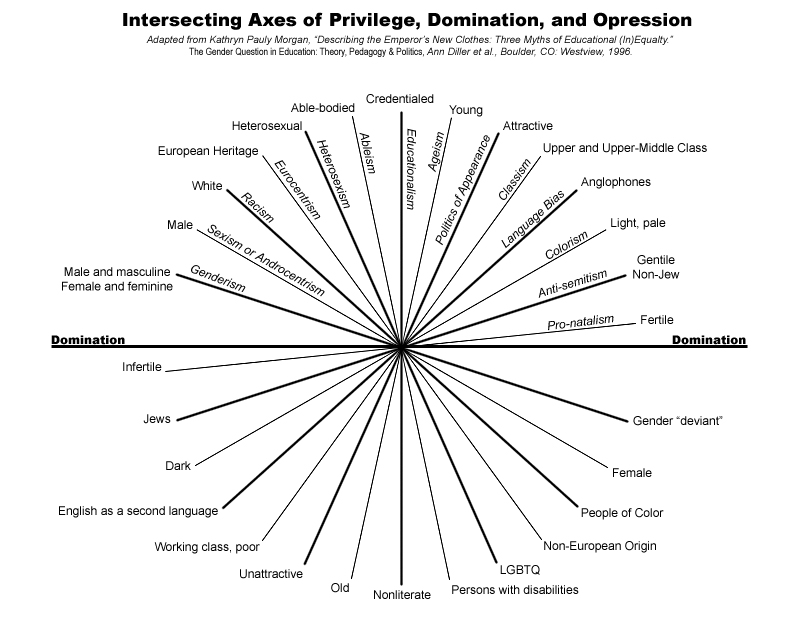
And this provides a radically different purpose in living than the ideologies of hegemony, critical race theory, and intersectionality do. One of the presumptions these ideologies share is that power is the most important status in the world. In Christ, however, Paul was able to say that his life was not about power or prestige. His life was about doing one thing: “forgetting what lies behind and straining forward to what lies ahead, I press on toward the goal for the prize of the upward call of God in Christ Jesus” (Phi. 3.13-14). Paul, his life no longer being tethered to this earth, was free to live out his identity in a desire to be with Christ and please Him (Phi. 1.23; 1 Co 4.1). And this new life, this new identity in Jesus, this new purpose for living, changes everything about the way humans relate and see one another.
Discover more from Standing Before God, This We Are and No More
Subscribe to get the latest posts sent to your email.
 Standing Before God, This We Are and No More
One thought on “Cultural Disunity and the Triune God, Part 7–New Life, Identity, and Purpose”
Comments are closed.